Welcome to Poli Path
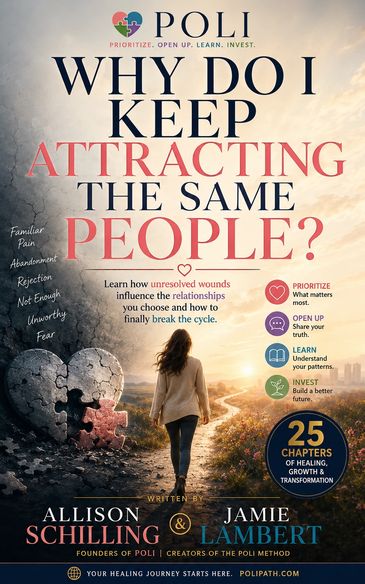
Prologue
Have you ever looked back at your relationships and wondered how different faces somehow became the same story?
Maybe their names changed. Maybe their jobs were different. Maybe they looked nothing alike. Yet somehow the ending always felt painfully familiar. You found yourself giving more than you received, walking on eggshells, question
Have you ever looked back at your relationships and wondered how different faces somehow became the same story?
Maybe their names changed. Maybe their jobs were different. Maybe they looked nothing alike. Yet somehow the ending always felt painfully familiar. You found yourself giving more than you received, walking on eggshells, questioning your worth, trying harder to earn love, or convincing yourself that this time would be different. Eventually the relationship ended, and after the hurt settled, another person entered your life carrying many of the same qualities as the last. Before long, you were standing in the middle of another cycle, asking yourself the same question you have probably asked dozens of times.
Why do I keep attracting the same people?
It is one of the most common questions people ask themselves after repeated heartbreak, failed friendships, unhealthy family dynamics, or toxic workplace relationships. Many people believe they are simply unlucky. Others assume that everyone they meet is selfish, manipulative, unavailable, or incapable of loving them the way they deserve. While there are certainly unhealthy people in the world, there is often a much deeper story unfolding beneath the surface.
The truth is both uncomfortable and incredibly hopeful.
You do not simply attract people.
You choose them.
Not consciously, of course. If you knew someone was going to betray you, manipulate you, or leave you feeling broken, you would almost certainly walk away. Instead, something much more subtle happens. Your mind, your emotions, and your nervous system are constantly searching for what feels familiar. Familiar does not always mean healthy. In fact, familiarity often grows out of experiences that shaped you long before you ever started dating.
The child who constantly fought for attention often becomes the adult who falls for emotionally unavailable partners. The teenager who learned that love had to be earned may become the adult who overextends themselves trying to prove they are enough. The person who grew up around criticism may mistake criticism for honesty. Someone raised in chaos may feel uncomfortable when life becomes peaceful because peace feels unfamiliar.
Without realizing it, we often recreate emotional environments that resemble the ones we survived rather than the ones we truly need.
This is not because you are weak.
It is not because you are broken.
It is not because you deserve unhealthy relationships.
It is because unresolved wounds have a remarkable way of influencing our choices until we become aware of them.
Imagine carrying around a box of puzzle pieces your entire life. Some pieces represent rejection. Others represent abandonment, fear, shame, betrayal, loneliness, insecurity, perfectionism, people pleasing, or feeling invisible. Every experience you have ever lived through adds another piece to that puzzle. Some pieces fit together beautifully, while others remain jagged, unfinished, and hidden beneath the surface. Although you may not see them every day, they quietly influence how you see yourself, how you interpret other people, what you tolerate, what you chase, and what you believe you deserve.
Those puzzle pieces become filters.
They influence who feels exciting.
They influence who feels safe.
They influence who feels familiar.
The people you repeatedly invite into your life often connect with the very wounds you have not yet healed.
This realization is not meant to produce guilt. It is meant to produce freedom.
Because if unresolved wounds helped create unhealthy patterns, healed wounds can create healthy ones.
That is where the POLI Method begins.
POLI stands for Prioritize, Open Up, Learn, and Invest. It is not simply another self improvement program or motivational slogan. It is a practical framework for understanding yourself, uncovering your emotional puzzle pieces, and making intentional choices that lead to lasting healing.
First, you Prioritize what truly matters by recognizing that your emotional health deserves your attention. Healing rarely happens accidentally. It begins when you decide that understanding yourself is worth the effort.
Next, you Open Up. Healing cannot thrive in secrecy. The stories you have carried alone often lose their power when they are spoken in safe places with trusted people. Vulnerability is not weakness. It is one of the greatest acts of courage.
Then you Learn. Every painful experience has something to teach you if you are willing to listen. Learning transforms regret into wisdom and helps you recognize the patterns that once controlled your life without your awareness.
Finally, you Invest. Healing is not a destination you reach overnight. It is a lifelong investment in healthier habits, stronger boundaries, better relationships, and a future that is no longer controlled by yesterday's pain.
Throughout this book you will not simply read about relationships. You will examine yourself with honesty and compassion. You will discover why certain personalities attract you, why some warning signs have been easy to ignore, why boundaries have felt difficult to maintain, and why healing yourself changes the kinds of people you allow into your life.
Some chapters may challenge beliefs you have held for years. Others may bring emotions you thought you had buried long ago. You may find yourself remembering conversations, relationships, disappointments, and victories that shaped who you are today. Welcome those moments. Awareness is often the first sign that healing has already begun.
Most importantly, remember this.
This book is not about blaming yourself for what others have done.
It is about giving yourself the power to choose differently moving forward.
The past may explain your patterns, but it does not have to determine your future.
The people you have chosen before do not have to define the people you choose next.
Every healthy relationship begins long before you meet another person. It begins with understanding yourself.
The cycle that has followed you for years can end.
Not because other people suddenly change.
Because you do.
As you turn the page, I invite you to approach each chapter with curiosity instead of judgment. Allow yourself to reflect honestly, answer the questions, complete the POLI challenges, and take each call to action seriously. Small choices repeated consistently create remarkable transformation.
Your story is not over.
Your puzzle is not beyond repair.
Your healing starts now.
Chapter 1
There comes a moment in almost everyone's life when they sit quietly, replaying the highlights and heartbreaks of their relationships, and a single question rises above all the others. It is not a question filled with anger, although anger may be present. It is not even a question filled with blame. It is a question born from exhaustion.
There comes a moment in almost everyone's life when they sit quietly, replaying the highlights and heartbreaks of their relationships, and a single question rises above all the others. It is not a question filled with anger, although anger may be present. It is not even a question filled with blame. It is a question born from exhaustion. After enough disappointment, enough tears, enough promises that ended in silence, and enough nights wondering where everything went wrong, the question finally surfaces. Why do I keep attracting the same people?
Perhaps you have asked it after another relationship ended exactly like the last one. Maybe you have watched someone slowly become emotionally distant after they once seemed completely invested. Maybe you have found yourself once again making excuses for someone who repeatedly disappointed you, convincing yourself that they were simply having a bad week, under stress, or struggling with things they had never shared. You may have believed that if you loved harder, communicated better, sacrificed more, or remained patient just a little longer, everything would eventually work out. Instead, you found yourself standing in the same emotional place you promised yourself you would never return to.
The names were different. Their appearance was different. Their careers, personalities, hobbies, and backgrounds may have had little in common. Yet somehow the ending felt strangely familiar. You walked away carrying the same hurt, the same confusion, and the same unanswered questions. After enough repetition, it becomes difficult not to wonder if the problem is everyone else or if somehow the common denominator is staring back at you in the mirror.
That realization can be incredibly uncomfortable. Most people instinctively pull away from it because it feels like accepting blame. The moment someone suggests that our own choices play a role in our relationships, our defenses immediately rise. We think, "Are you saying I deserved to be lied to?" "Are you saying I deserved to be manipulated?" "Are you saying I caused someone else's behavior?" Absolutely not. No one deserves betrayal, emotional abuse, neglect, or manipulation. The choices another person makes belong to them. Their actions are their responsibility. Their character is their responsibility. Their honesty is their responsibility. Nothing in this book is intended to excuse unhealthy behavior or place responsibility for someone else's decisions on your shoulders.
What this book does invite you to examine is something different. It asks an important question. Why did this particular person feel so familiar? Why did certain behaviors seem acceptable until much later? Why were some warning signs easier to overlook than others? Why did your heart continue moving toward someone your mind was already questioning? These are not questions of blame. They are questions of awareness. Awareness creates options, and options create freedom.
Imagine walking through life wearing a pair of glasses that you have worn since childhood. Over the years the lenses become scratched, cloudy, and distorted, but because they have been on your face for so long, you no longer notice them. You simply assume the world looks exactly the way you see it. Relationships work much the same way. Every experience, every disappointment, every encouraging word, every painful memory, and every emotional wound quietly shapes the lens through which you view yourself and everyone around you. You may believe you are choosing people based entirely on chemistry or attraction, but underneath those conscious thoughts is an emotional lens that has been developing for years.
That lens often begins long before your first romantic relationship. It starts in childhood. It begins with the way love was demonstrated inside your home. It develops through the words spoken over you, the affection you received, the conflicts you witnessed, and the security or insecurity you experienced growing up. Even if your parents loved you deeply, they were imperfect human beings carrying their own puzzle pieces, and those puzzle pieces inevitably influenced the environment in which you were raised. Some people grew up surrounded by encouragement, consistency, and emotional safety. Others grew up wondering which version of their parent would walk through the door each evening. Some learned that mistakes were opportunities to grow. Others learned that mistakes made love disappear, even if only temporarily. Some children were taught that their opinions mattered. Others learned to stay quiet because speaking honestly only created conflict.
Children rarely question the environment they grow up in. It simply becomes normal. It becomes the definition of love, family, safety, conflict, and connection. Those early experiences quietly settle into the heart like pieces of a puzzle. As the years pass, more pieces are added. Friendships, school experiences, rejection, success, failure, bullying, acceptance, loss, and triumph all continue shaping the picture. Before long, you are no longer just reacting to the world around you. You are interpreting it through thousands of experiences that have quietly formed your emotional blueprint.
That blueprint influences far more than most people realize. It affects what catches your attention, what makes you feel safe, what excites you, what frightens you, and what you believe you deserve. It influences how quickly you trust someone, how much poor behavior you tolerate, how easily you forgive repeated mistakes, and whether you believe healthy love is something you can actually have. Most of these decisions happen beneath the surface, long before logic has a chance to weigh in.
This is one of the reasons people are often surprised by their own choices. Friends may have warned them about someone from the very beginning. Family members may have pointed out obvious concerns. Coworkers may have quietly questioned why they continued making excuses for someone who clearly was not treating them well. Yet despite all the outside voices, the relationship continued. Looking back later, the warning signs seem obvious, but at the time they barely registered. It was not because you were unintelligent. It was because familiarity has an incredible ability to disguise itself as comfort.
One of the greatest misconceptions about relationships is the belief that chemistry is always a sign of compatibility. Chemistry is powerful, but chemistry is not always healthy. Sometimes chemistry simply means someone activates emotional experiences that already exist inside you. They may remind your nervous system of something familiar. Familiarity often feels exciting because it requires no adjustment. It fits the emotional blueprint you have carried for years. Unfortunately, familiar patterns are not always healthy patterns. Sometimes what feels like love is actually recognition. Your heart recognizes an emotional environment it has experienced before, even if that environment once caused pain.
Think about how many times you have heard someone say, "I do not know why I was drawn to them. I just was." There is truth in that statement, but there is usually more beneath it. Attraction is not random. It is influenced by personality, values, experiences, beliefs, emotional needs, and unresolved wounds. Two people can meet the exact same individual and have completely different reactions. One person may immediately recognize unhealthy behavior and walk away. Another may feel deeply connected almost instantly. The difference often lies in the emotional puzzle pieces each person carries.
At POLI, we often talk about puzzle pieces because healing is rarely about one single event. Your life is made up of countless experiences, each adding another piece to who you are becoming. Some puzzle pieces are filled with confidence, resilience, kindness, compassion, and wisdom. Others hold rejection, abandonment, fear, shame, insecurity, betrayal, or loneliness. None of these pieces exist in isolation. Together they create the picture you see when you look at yourself. They also influence the picture you expect from other people.
If someone spent years believing they were never enough, they may unconsciously feel drawn toward people whose approval always seems just out of reach. If someone learned that love required constant sacrifice, they may continue giving until they have nothing left because that feels normal. If someone grew up believing conflict always led to abandonment, they may avoid difficult conversations entirely, even when those conversations could strengthen a relationship. None of these choices are usually intentional. They are simply familiar responses built over time.
The encouraging news is that emotional blueprints are not permanent. The puzzle is not glued together forever. Every experience of healing adds new pieces. Every healthy boundary changes the picture. Every honest conversation, every moment of self-awareness, every act of courage, and every decision to value yourself gradually reshapes what feels familiar. The person you become tomorrow does not have to be controlled by the experiences that shaped yesterday.
That is why you are holding this book.
This is not simply a book about relationships. It is a journey into understanding yourself. Before you can consistently choose healthier relationships, you must first understand the emotional compass that has been guiding your decisions all along. Once you recognize the hidden forces influencing your choices, you gain something incredibly valuable. You gain the ability to choose differently.
The cycle does not end because the world suddenly fills with better people. The cycle begins to end when you become someone who recognizes your own worth, understands your own puzzle pieces, and refuses to settle for relationships that repeatedly reopen wounds you are finally learning to heal.
As you continue reading, I want to challenge you to temporarily set aside the story you have been telling yourself about your relationships. Not because your experiences were not real, but because sometimes the stories we tell ourselves become prisons instead of pathways to healing. Maybe your story sounds something like this. "Every person I date eventually leaves." "No one ever chooses me." "I always end up with narcissists." "There are no good men left." "Every woman I meet eventually lies." While those statements may feel true based on your experiences, they are conclusions built from pain, not necessarily from complete understanding. When pain writes the narrative, hope often disappears from the ending.
Imagine reading only the last chapter of every book you have ever owned. You would know how each story ended, but you would completely miss everything that led to that ending. Relationships are no different. We often focus on the betrayal, the breakup, the argument, or the disappointment without fully examining the smaller moments that quietly shaped the relationship long before everything fell apart. Healing requires slowing down enough to examine the entire story, not just its conclusion. Somewhere in those earlier chapters are clues that can change the way you move forward.
Many people unknowingly operate on emotional autopilot. They meet someone new, feel immediate chemistry, begin spending time together, overlook a few uncomfortable moments, explain away inconsistent behavior, and continue investing emotionally because they have already imagined the future. By the time serious concerns become impossible to ignore, their heart has become deeply attached. Walking away suddenly feels far more difficult than it would have been during those early conversations. This is one reason awareness is so powerful. The sooner you recognize your own patterns, the sooner you begin making decisions from wisdom instead of emotional momentum.
One of the greatest gifts you can give yourself is permission to become curious rather than defensive. Curiosity asks questions. Defensiveness protects comfort. Curiosity says, "Why did I ignore that?" Defensiveness says, "It wasn't that bad." Curiosity says, "What need was I trying to have met?" Defensiveness says, "Everyone has flaws." Curiosity invites growth because it seeks understanding. Defensiveness keeps us repeating familiar cycles because it avoids uncomfortable truth. Growth rarely begins with certainty. It begins with honest questions.
This is where the POLI Method becomes more than an idea. It becomes a practical way of approaching your own healing. The first step is Prioritize. Most people spend far more time trying to understand other people than they spend understanding themselves. They analyze text messages, replay conversations, ask friends for advice, and search for explanations about someone else's behavior while neglecting the person they have the most control over. Healing begins when you prioritize your own emotional health. That is not selfish. It is responsible. You cannot consistently build healthy relationships while ignoring the foundation they are built upon.
The second step is Open Up. Many people have spent years hiding the parts of themselves they believe are too messy, too broken, or too embarrassing for anyone else to see. They smile while carrying silent pain. They laugh while quietly questioning their worth. They tell everyone they are fine because admitting otherwise feels uncomfortable. Yet hidden wounds rarely heal. They simply become quieter while continuing to influence decisions behind the scenes. Opening up does not mean sharing your life story with everyone you meet. It means finding safe people and safe spaces where honesty becomes part of your healing instead of something you fear.
The third step is Learn. Every relationship teaches something, even the painful ones. Some relationships teach us what love looks like. Others teach us what love should never become. Some teach us how strong we really are. Others reveal where our boundaries still need work. Learning transforms pain into wisdom. Without learning, painful experiences simply become repeated experiences. The goal is not to avoid mistakes forever. The goal is to make sure each mistake leaves you wiser than before.
The final step is Invest. Healing is not accomplished by reading one book, attending one seminar, or listening to one inspiring podcast. Healing is built through daily decisions. It is choosing boundaries when guilt tells you not to. It is choosing peace when chaos feels exciting. It is choosing honesty when pretending feels easier. It is investing your time, your attention, your energy, and your effort into becoming the healthiest version of yourself. Every healthy choice becomes another puzzle piece that strengthens the picture you are creating.
As you work through this book, there may be moments when certain chapters feel deeply personal. You may recognize yourself in examples you wish you did not relate to. You may remember conversations that still sting or relationships you thought you had completely moved beyond. That does not mean you are moving backward. It often means healing is finally reaching places you previously avoided. Growth has a way of uncovering what still needs attention, not to shame you, but to free you.
One of the biggest myths about healing is that it should erase all memories of pain. Healing does not erase your past. It changes your relationship with it. There will always be people who hurt you. There will always be moments you wish had unfolded differently. Those memories may never completely disappear, but they no longer have to control your choices. They can become reminders of how far you have come instead of anchors holding you in place.
You also need to remember something incredibly important as you begin this journey. Your value has never been determined by who stayed or who left. It has never been measured by how someone treated you, how someone spoke to you, or whether someone recognized your worth. Your value existed long before anyone had the opportunity to appreciate it. When you begin believing that truth, your relationships start changing because your standards begin changing. People who once seemed irresistible suddenly seem emotionally unavailable. Behaviors you once excused become unacceptable. Peace begins to feel attractive. Consistency becomes exciting. Respect becomes nonnegotiable. Healing quietly changes what your heart reaches toward.
That transformation rarely happens overnight. It happens one decision at a time. One boundary at a time. One honest conversation at a time. One act of self respect at a time. Every healthy choice slowly rewrites the emotional blueprint that once convinced you unhealthy relationships were normal. Before long, you realize something remarkable. You are no longer attracting different people because you are no longer choosing from the same unhealed place.
This chapter is not meant to leave you questioning everything about your past. It is meant to leave you hopeful about your future. You cannot rewrite yesterday, but you absolutely have the power to influence tomorrow. Every chapter ahead will give you another opportunity to discover the puzzle pieces that have quietly shaped your life and to replace survival patterns with healthier ones. The goal is not perfection. The goal is progress. Every step you take toward healing is a step away from repeating the same painful cycle.
POLI Challenge
Take out a journal or a blank sheet of paper and write down every significant relationship, friendship, or close connection you have had. Beside each name, list the qualities that first attracted you to that person. Then write down the reasons the relationship eventually became unhealthy or ended. When you finish, look for repeating themes. Do you notice the same personality traits appearing over and over? Do you see similar warning signs that you ignored? Do you recognize emotional needs that kept showing up in different relationships? Do not judge yourself. Simply observe. Awareness is the first puzzle piece of healing.
Now answer these four questions using the POLI Method.
Prioritize: What emotional pattern in my relationships deserves my attention first?
Open Up: Who is one safe person I can honestly talk to about these repeating patterns?
Learn: What lesson has my past been trying to teach me that I have not fully accepted?
Invest: What is one healthy decision I can make this week that reflects the person I want to become instead of the person I used to be?
Call to Action
The cycle does not have to continue.
Today, make the decision to stop asking, "Why do I keep attracting the same people?" and begin asking, "What can I heal within myself so I start choosing differently?"
Visit POLIPath.com, complete your personal healing assessment, and begin discovering the puzzle pieces that have quietly shaped your relationships. Join the POLI community, connect with others who are on the same journey, and commit to Prioritize, Open Up, Learn, and Invest every single day. Your future relationships will not be built by chance. They will be built by the choices you make starting today.