Preview
Prologue
You did not wake up one day and decide to feel exhausted.
You did not choose to feel overwhelmed, emotionally drained, or disconnected from yourself. You adapted. You survived. You learned how to function inside circumstances that demanded more from you than they gave back.
And over time, that functioning became your normal.
This book exist
You did not wake up one day and decide to feel exhausted.
You did not choose to feel overwhelmed, emotionally drained, or disconnected from yourself. You adapted. You survived. You learned how to function inside circumstances that demanded more from you than they gave back.
And over time, that functioning became your normal.
This book exists because many people are living lives that look fine on the outside while feeling heavy on the inside. They are doing what needs to be done. Showing up. Being responsible. Taking care of others. Holding it together.
But something feels off.
The weight you feel is not imaginary. It is not weakness. It is not a failure of discipline or gratitude. It is the accumulation of things that were never meant to stay in your life long term.
Unspoken emotions. Unhealthy relationships. Outdated beliefs. Relentless expectations. Unprocessed pain.
These things do not disappear when ignored. They settle. They stack. They seep into your body, your thoughts, your choices, and your relationships.
Eventually, they begin to affect how you live.
Most people are not struggling because they lack motivation. They are struggling because they are carrying too much that does not belong to them anymore.
This book is not about becoming a better version of yourself through effort or pressure. It is about removing what is contaminating your life so the real you can breathe again.
Detox is not about restriction. It is about release.
Just as your body needs to eliminate toxins to function properly, your life needs the same process. Emotional toxins. Relational toxins. Mental toxins. Habitual toxins.
Things that once helped you survive may now be harming your health.
You may have learned to tolerate environments that drain you. To stay quiet to avoid conflict. To overgive to maintain connection. To ignore your intuition because it felt inconvenient or risky.
These strategies may have kept you safe at one point. They may have helped you belong. They may have protected you from loss or rejection.
But survival strategies have an expiration date.
When they outlive their usefulness, they begin to cost you your peace.
Detoxifying your life means becoming honest about what you are tolerating that is slowly wearing you down. It means acknowledging patterns you avoid confronting. It means recognizing that health does not happen by accident.
Health happens through courage.
Courage to look inward. Courage to say no. Courage to let go. Courage to choose differently.
This work is not easy. It will challenge you. It will ask you to examine parts of your life you may have avoided for years. It will invite you to confront habits, relationships, and beliefs that feel familiar but unhealthy.
But it will also give you something many people have forgotten how to access.
Relief.
Relief that comes from clarity. Relief that comes from alignment. Relief that comes from no longer carrying what does not belong to you.
You may discover that the exhaustion you feel is not because you are doing too little, but because you are doing too much of what drains you. You may realize that peace has been unavailable not because life is unfair, but because your boundaries have been unprotected.
You may recognize that some relationships feel heavy not because you do not care, but because they are no longer aligned with who you are becoming.
This book will not tell you to burn your life down. It will not ask you to make impulsive decisions. It will not shame you for where you are.
It will invite you to slow down and tell the truth.
Truth about your energy. Truth about your relationships. Truth about your habits. Truth about your patterns. Truth about your needs.
Detox begins with awareness.
Awareness of what is contaminating your peace. Awareness of what is pulling you backward. Awareness of what you have been tolerating out of fear, obligation, or habit.
You will be asked to rest. To reset. To heal.
You will be asked to identify what is toxic and decide how to address it. Some things will need to be removed. Some will need boundaries. Some will need transformation.
Not everything can be eliminated, but everything can be approached with intention.
You will be challenged to examine your heart, your emotions, your relationships, and your habits. You will be invited to confront old patterns, cycles, and hurts that quietly shape your life.
You will be asked to make adjustments.
Change does not happen by wishing things were different. It happens when you are willing to do the uncomfortable work of alignment.
Health does not happen by accident.
It happens when you stop avoiding what needs attention and start responding with courage.
This book is for the person who knows something needs to change but does not want another list of things to fix. It is for the person who is tired of surviving and ready to live with intention.
It is for the person who senses that life could feel lighter if they stopped carrying what was never meant to be permanent.
You do not need to read this book perfectly. You do not need to apply everything at once. You do not need to rush.
You just need to be honest.
As you move through these pages, pay attention to what resonates. Notice what makes you uncomfortable. Observe where resistance arises.
Those reactions are information.
They point to where detox is needed most.
You are not broken. You are burdened.
And burden can be released.
This is not about becoming someone else. It is about removing what is not you.
Take a breath.
You are about to begin choosing alignment over survival.
And that choice changes everything.
Chapter 1
Most people do not wake up one day and choose an unhealthy life. They slowly adapt to it.
They adapt to exhaustion and call it responsibility. They adapt to chaos and call it normal. They adapt to emotional pain and call it strength. Over time, the very things that should have alarmed them become familiar, and familiarity is powerful enou
Most people do not wake up one day and choose an unhealthy life. They slowly adapt to it.
They adapt to exhaustion and call it responsibility. They adapt to chaos and call it normal. They adapt to emotional pain and call it strength. Over time, the very things that should have alarmed them become familiar, and familiarity is powerful enough to silence intuition.
This is how tolerance begins.
Tolerance is not acceptance. It is endurance. It is learning how to live inside something that hurts while convincing yourself it is manageable. It is telling yourself that it could be worse, that you should be grateful, that this is just how life is.
But the life you tolerate is the life you keep.
Most toxicity does not enter our lives loudly. It enters quietly, gradually, almost politely. It arrives through habits we excuse, relationships we justify, and patterns we repeat because they feel known. We do not notice the damage at first because it happens slowly. The weight increases a little at a time, and we adjust our posture instead of putting it down.
You were not meant to live bent over under the weight of what you have learned to carry.
There is a difference between surviving a season and building a life. Survival teaches you how to get through. Healing teaches you how to live. Many people remain in survival mode long after the threat has passed because it feels safer than change.
Change requires confrontation.
And confrontation is uncomfortable.
The first step in detoxifying your life is not removal. It is awareness. You cannot remove what you refuse to name. You cannot heal what you continue to excuse. And you cannot reset a life you have not fully examined.
This chapter is an invitation to stop tolerating what is slowly poisoning you.
Tolerance is often mistaken for patience. But patience does not ask you to abandon yourself. Tolerance does. It asks you to endure what violates your peace, your values, and your emotional health in the name of keeping things together.
Many people tolerate things because they fear disruption more than damage. Disruption feels risky. Damage feels familiar.
So they stay.
They stay in environments that drain them. They stay in relationships that diminish them. They stay in patterns that keep them stuck. They stay because leaving would require courage, honesty, and a willingness to feel discomfort.
But staying has a cost.
The cost shows up as resentment. As numbness. As chronic exhaustion. As a quiet grief you cannot quite explain. As the feeling that you are living a life that looks fine from the outside but feels heavy on the inside.
Your body knows before your mind admits it.
Your body carries what your words avoid. Tension settles into your shoulders. Fatigue lingers no matter how much you rest. Anxiety hums beneath the surface. You feel disconnected from joy, from clarity, from yourself.
These are not random symptoms. They are signals.
Your life is trying to tell you something.
Most people ignore these signals because listening would require change. It would require saying no. It would require boundaries. It would require acknowledging that some things you have defended are actually hurting you.
Detox begins when you stop arguing with your own discomfort.
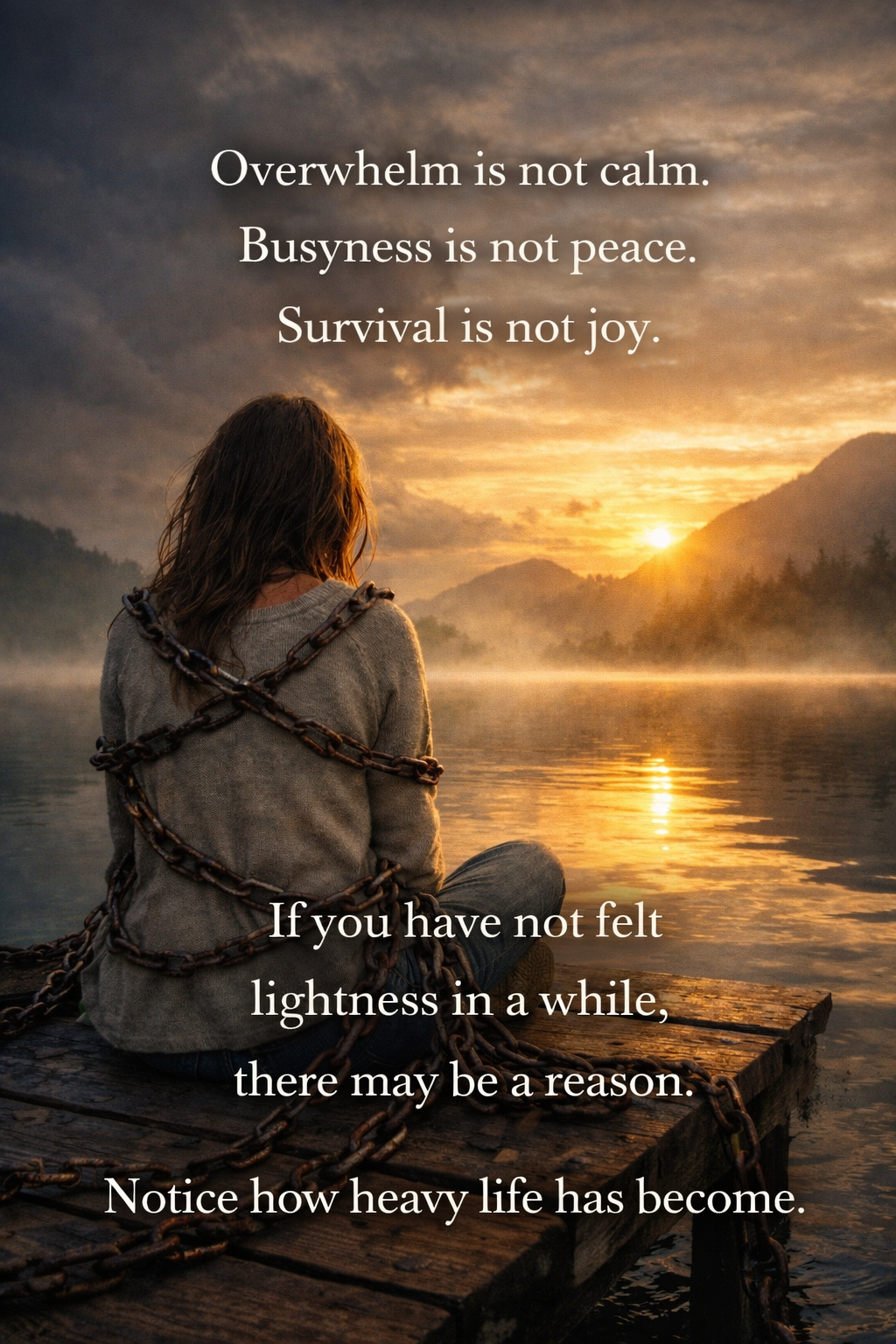
There are things in your life right now that you have learned to tolerate but were never meant to carry. They may not look dramatic. They may not appear urgent. But they are shaping you every day.
Toxicity does not always come from obvious harm. Sometimes it comes from constant negativity. From relationships rooted in gossip. From environments where growth is mocked. From expectations that require you to shrink yourself to belong.
Sometimes the toxin is the pressure to always be available. To always be agreeable. To always be strong. To always be okay.
This pressure teaches you to silence your needs in order to keep the peace. But peace that requires self abandonment is not peace at all.
You may have learned to tolerate things because you were taught that confrontation was selfish. That boundaries were unloving. That endurance was a virtue no matter the cost. But healing requires a different kind of strength.
Healing requires honesty.
Honesty about what drains you. Honesty about what hurts you. Honesty about what no longer fits the life you are trying to build.
The life you want cannot grow in the same soil that poisoned the last one.
Detoxifying your life will require you to stop minimizing what you feel. If something consistently leaves you depleted, confused, or diminished, it deserves your attention. If you feel like you have to pretend, perform, or protect yourself constantly, something is wrong.
You do not need permission to acknowledge that.
You may have tolerated certain patterns because they once helped you survive. People pleasing may have kept you safe. Avoidance may have prevented conflict. Overworking may have given you a sense of control. But survival tools are not meant to become lifelong strategies.
What once protected you may now be limiting you.
Detox is not about judging your past. It is about choosing your future.
To detox your life, you must first be willing to see it clearly. Not through the lens of obligation. Not through the lens of guilt. But through the lens of truth.
Ask yourself where you feel the most drained. Ask yourself where you feel the most tension. Ask yourself where you feel the least like yourself.
These questions are not meant to overwhelm you. They are meant to orient you.
You cannot heal everything at once. But you can begin by noticing.
Notice where you feel pressured to compromise your values. Notice where negativity feels normalized. Notice where you are tolerated but not supported. Notice where you are giving more than you are receiving.
Notice where you feel stuck.
Stagnation is often a sign that something needs to be addressed.
Many people mistake familiarity for safety. But familiar does not always mean healthy. Familiar just means known. And known feels easier than unknown, even when it hurts.
Detoxification asks you to choose health over familiarity.
This choice may feel destabilizing at first. When you stop tolerating what you have normalized, things shift. Relationships change. Habits are exposed. Emotions surface.
This is not failure. This is progress.
Rest does not mean avoidance. Rest means creating space to listen. Reset does not mean destruction. Reset means realignment. Healing does not mean erasing the past. Healing means learning from it without living inside it.
As you move through this book, you will be asked to examine areas of your life that you may have avoided. Not to shame yourself. Not to blame others. But to reclaim responsibility and agency.
You are allowed to want more than survival.
You are allowed to want peace without chaos. Growth without guilt. Relationships without constant strain. A life that feels clean and aligned rather than heavy and reactive.
The first step is recognizing what you have been tolerating.
Not everything that is familiar belongs in your future.
And not everything that feels uncomfortable is wrong.
Sometimes discomfort is simply the signal that you are waking up.
Waking up is rarely dramatic. It does not always arrive as a single moment of clarity. More often, it shows up as quiet discomfort that refuses to go away. A growing sense that something is off. A realization that you are tired in ways rest cannot fix. A feeling that you are managing life rather than living it.
This is not weakness. This is awareness beginning to surface.
Most people delay detoxing their lives because awareness brings responsibility. Once you see what is hurting you, you are faced with a choice. You can continue tolerating it, or you can begin changing it. And change requires energy, courage, and honesty.
So many people stay stuck not because they are incapable, but because they are exhausted. Exhaustion makes tolerance feel easier than transformation. It convinces you that it is better to endure what you know than to risk the unknown.
But endurance has limits.
There comes a point where your soul can no longer carry what your mind has justified. When you reach that point, symptoms appear. Emotional numbness. Irritability. Disconnection. Loss of motivation. You may feel like you are drifting through your own life.
This is not laziness. This is depletion.
Detoxification begins when you recognize that your exhaustion is not a personal failure. It is a signal that something in your life is misaligned.
Many people attempt to fix exhaustion by adding more. More productivity. More discipline. More self improvement. But exhaustion caused by toxicity cannot be solved by doing more. It must be solved by removing what drains you.
Rest is the first act of resistance against a life that demands constant output.
Rest is not quitting. It is pausing long enough to tell the truth.
When you slow down, you begin to notice patterns you have ignored. You begin to see how often you silence yourself. How frequently you compromise. How many times you choose peacekeeping over peace.
You begin to notice how much of your energy is spent managing other people’s emotions, expectations, and dysfunction.
This is where detox becomes personal.
You are not responsible for fixing everyone around you. You are responsible for protecting your health.
One of the most damaging beliefs many people carry is the idea that suffering quietly makes them noble. That tolerating discomfort proves loyalty. That staying silent preserves harmony.
But harmony that costs you your well being is not harmony. It is self neglect.
There is a difference between compassion and self sacrifice. Compassion allows you to care without losing yourself. Self sacrifice asks you to disappear so others can remain comfortable.
Detoxing your life requires you to stop disappearing.
This is where discomfort increases. When you stop tolerating what you once accepted, people may notice. Systems may resist. Relationships may shift.
This does not mean you are wrong. It means you are changing.
Growth often disrupts dynamics that were built on your silence.
You may feel guilt when you begin setting limits. You may feel fear when you start saying no. You may feel uncertainty when you step away from patterns that once defined you.
These feelings are part of the detox process.
Just as physical detox can cause temporary discomfort, emotional detox can stir things up before clarity returns. Old emotions surface. Old wounds ache. Old habits demand attention.
This does not mean you should stop. It means your system is adjusting.
Detoxing your life is not about creating conflict. It is about creating alignment.
Alignment between your values and your actions. Alignment between your needs and your boundaries. Alignment between the life you want and the choices you make daily.
You cannot align your life while tolerating what pulls you in the opposite direction.
This chapter is not asking you to take immediate action. It is asking you to become mindful. To observe your life without judgment. To notice where you feel constricted, drained, or disconnected.
Pay attention to what you dread. Pay attention to what you avoid. Pay attention to what feels heavy before it even begins.
These are not random reactions. They are clues.
Your nervous system responds to environments before your mind rationalizes them. If something consistently triggers tension, anxiety, or shutdown, it deserves examination.
Detoxification begins with permission. Permission to admit that something is not working. Permission to acknowledge that you deserve better. Permission to believe that health is possible.
You may have told yourself that this is just how life is. That everyone feels this way. That you should be grateful. That wanting more is selfish.
But wanting health is not selfish. Wanting peace is not ungrateful. Wanting growth is not disloyal.
You are allowed to want a life that does not require constant recovery.
You are allowed to want relationships that do not leave you questioning your worth.
You are allowed to want habits that nourish rather than numb.
This book will ask you to move slowly but honestly. Detoxing your life is not about dramatic exits or impulsive decisions. It is about intentional awareness followed by aligned action.
Before you can reset your life, you must see it clearly. Before you can heal, you must acknowledge what hurts. Before you can remove what is toxic, you must stop pretending it is harmless.
The life you have learned to tolerate does not have to be the life you keep.
Awareness is the first step toward freedom.
In the next chapter, we will explore how survival mode quietly becomes an identity and how living in constant reaction prevents real healing from taking place.
For now, rest here. Let this truth settle. Notice what surfaced as you read. Pay attention to what resonated and what resisted.
Your body and soul are already responding.
That is where detox begins.