Preview
Prologue
There comes a moment in every person’s life when they realize that the problem was never the world, never the people around them, never the circumstances stacked against them, but the unexamined patterns quietly operating beneath their own skin. It is not a loud realization. It does not arrive with fireworks or applause. It comes in the
There comes a moment in every person’s life when they realize that the problem was never the world, never the people around them, never the circumstances stacked against them, but the unexamined patterns quietly operating beneath their own skin. It is not a loud realization. It does not arrive with fireworks or applause. It comes in the quiet after the argument, in the silence after the door closes, in the loneliness that follows another repeated mistake. It comes when you say, “Why does this keep happening to me?” and for the first time, instead of pointing outward, you look inward.
Learning begins there.
Not with information. Not with books. Not with degrees.
It begins with awareness.
You can prioritize your life and protect your boundaries. You can open up and allow yourself to be seen. You can build safer relationships and even begin healing from trauma. But if you do not learn, truly learn, you will unknowingly rebuild the same broken patterns inside a prettier frame. You will call growth what is actually repetition. You will confuse emotional intensity with emotional maturity. You will believe you have changed when you have only adjusted the scenery.
Learning is different. Learning requires humility. Learning requires confrontation.
And confrontation, especially of yourself, is one of the hardest acts of courage you will ever perform.
Most people want change without examination. They want better outcomes without better awareness. They want healthier love without understanding why they tolerated unhealthy love. They want peace without asking themselves why chaos felt familiar. They want confidence without questioning the insecurity they protect.
Learning dismantles illusions.
It exposes the blueprint underneath your reactions. It reveals why certain words feel like attacks even when they are not. It shows you why you chase what hurts you and avoid what might heal you. It uncovers why you overreact in some moments and shut down in others. It forces you to sit with the uncomfortable possibility that the common denominator in your repeated pain is not fate, it is pattern.
This is not a book about shame.
This is not a book about blame.
This is a book about power.
Because once you see the pattern, you can interrupt it. Once you understand your wiring, you can rewire it. Once you learn why you do what you do, you stop feeling like a victim of your own life.
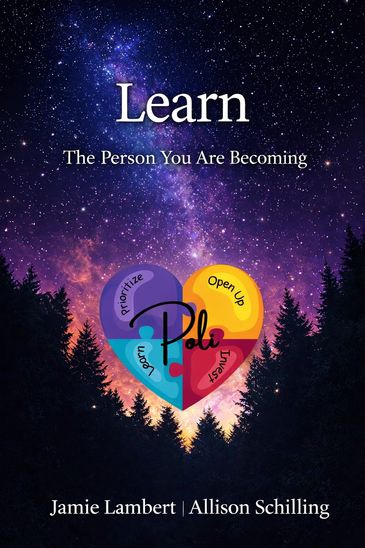
In Prioritize, you learned to protect your foundation. You discovered that your emotional health is not selfish, that boundaries are not cruel, and that self-care is not indulgent but essential. You began identifying which puzzle pieces mattered most and which ones had been misplaced by pressure, expectation, or fear.
In Open Up, you discovered vulnerability. You learned that connection requires courage, that honesty creates intimacy, and that hiding protects nothing but loneliness. You began letting people see the real you instead of the curated version of you. You started practicing emotional safety.
Now we enter the third movement of transformation.
Now we learn.
Learning is the bridge between awareness and wisdom. It is the space where you stop reacting automatically and start responding intentionally. It is where you examine your childhood without rewriting it, your trauma without romanticizing it, your habits without excusing them. It is where you take responsibility not for what happened to you, but for what you do with what happened.
Learning does not erase your past. It explains it.
And explanation is liberating.
Most people live their entire lives inside emotional reflexes they never chose. They inherited them. They absorbed them. They adapted them in order to survive environments that required protection. As children, you learned quickly what kept you safe. You learned whether silence was safer than speaking. You learned whether perfection earned approval. You learned whether anger gave you control. You learned whether people were predictable or unpredictable. You learned whether love was steady or conditional.
And then you grew up.
But the emotional programming often did not.
You may be an adult in age but still reacting with a child’s fear. You may be capable of logical thought but still emotionally wired for survival instead of stability. You may crave healthy relationships while unconsciously gravitating toward what mirrors your early emotional experiences.
Learning is the moment you pause and ask, “Where did this come from?”
Not in accusation. In curiosity.
Curiosity is one of the most powerful tools in growth. It removes defensiveness. It opens investigation. It invites understanding instead of condemnation. When you become curious about your reactions instead of ashamed of them, you give yourself permission to evolve.
Why do certain personalities irritate you immediately? Why does silence feel threatening? Why does criticism feel catastrophic? Why do you withdraw when someone gets close? Why do you overextend yourself to feel needed?
These are not random tendencies. They are learned responses.
And what was learned can be unlearned.
This book will challenge you to examine the emotional habits that have shaped your relationships. It will ask you to reflect on your communication patterns, your attachment tendencies, your conflict responses, your belief systems. It will invite you to analyze how you interpret events and how those interpretations influence your behavior.
You will not just explore what you feel. You will explore why.
There is a difference between experiencing emotion and understanding emotion. Emotional intelligence is not about suppressing feelings; it is about recognizing them, regulating them, and responding to them in ways that align with your values instead of your impulses.
Learning strengthens emotional intelligence.
It teaches you that feelings are valid but not always accurate. It teaches you that thoughts can be distorted. It teaches you that not every reaction deserves action. It teaches you that maturity is measured not by how loudly you defend yourself but by how thoughtfully you engage.
This part of the POLI path is transformative because it moves you from awareness to mastery.
You are not learning to control others. You are learning to understand yourself.
When you understand yourself, you stop expecting others to manage your emotional world. You stop projecting unresolved pain onto people who did not cause it. You stop demanding reassurance when what you truly need is healing. You stop confusing intensity with intimacy.
You become stable.
Stability is powerful.
It allows you to enter rooms without absorbing every mood. It allows you to receive feedback without collapsing. It allows you to apologize without self-destruction. It allows you to disagree without escalation. It allows you to love without losing yourself.
But stability requires learning.
There will be moments in this book when you feel exposed. You may recognize yourself in behaviors you once justified. You may see relationships differently. You may revisit memories that shaped you. You may identify habits that once felt protective but now feel limiting.
Do not rush through those moments.
Sit with them.
Learning requires slowing down. It requires reflection. It requires resisting the urge to defend and instead choosing to understand. The goal is not perfection. The goal is progress. The goal is awareness that leads to intentional change.
You are not broken.
You are patterned.
And patterns can be rewritten.
When you prioritize yourself, you protect your foundation. When you open up, you allow connection. When you learn, you refine your character. When you invest, you build legacy.
Learning prepares you for investment.
You cannot invest wisely in relationships, opportunities, or purpose if you do not understand the emotional currency you carry. You cannot build something lasting if you do not recognize the structural weaknesses within yourself. You cannot lead others if you have not first led your own emotional growth.
Learning is leadership.
It begins internally.
It is easy to blame the world for your disappointments. It is easy to criticize others for their shortcomings. It is easy to see the flaws in people who hurt you. It is much harder to ask, “What did I ignore? What did I tolerate? What did I contribute?”
That question is not self-condemnation. It is self-empowerment.
You are responsible for your healing. You are responsible for your growth. You are responsible for your patterns once you become aware of them.
Awareness removes excuses.
But it also unlocks freedom.
Because when you understand your triggers, they lose power. When you recognize your insecurities, they stop controlling your choices. When you identify your defense mechanisms, you can decide when they are necessary and when they are destructive.
Learning replaces reaction with intention.
It transforms arguments into conversations. It turns assumptions into clarifications. It converts insecurity into communication. It changes avoidance into engagement.
This is not overnight work.
This is lifelong work.
But it is worthy work.
Imagine what your relationships would look like if you paused before responding. Imagine what your career would feel like if you understood your strengths and blind spots. Imagine what your family dynamic could become if generational patterns were consciously interrupted instead of unconsciously repeated.
That is the promise of learning.
It is not flashy. It is not dramatic.
It is foundational.
It is the quiet discipline of self-examination. It is the humility of growth. It is the willingness to admit that you are still becoming.
And becoming is beautiful.
You are not who you were five years ago. You are not who you were even last year. The very fact that you are reading this means you desire expansion. You desire clarity. You desire depth.
Learning gives you depth.
It teaches you that maturity is not the absence of emotion but the mastery of it. It teaches you that strength is not loud dominance but calm consistency. It teaches you that growth is not about changing who you are at your core but refining how you show up.
You are not learning to become someone else.
You are learning to become more fully yourself.
And that requires courage.
It requires courage to examine your insecurities. It requires courage to acknowledge your flaws. It requires courage to forgive yourself for what you did not know when you did not know it.
Be gentle with yourself in this process.
You are not expected to have mastered what you were never taught.
This book is not about condemnation. It is about education. It is about emotional literacy. It is about developing the skills that allow you to navigate life intentionally instead of impulsively.
You deserve that level of clarity.
You deserve relationships built on understanding instead of assumption. You deserve communication grounded in respect instead of reaction. You deserve a life directed by wisdom instead of wounded reflex.
Learning will not remove every conflict. It will not eliminate every misunderstanding. It will not prevent every disappointment.
But it will change how you experience them.
It will anchor you.
It will steady you.
It will mature you.
And maturity is attractive. It is calming. It is powerful. It is rare.
As you move through this book, remember that awareness is not a destination but a discipline. You will uncover new layers of yourself. You will recognize areas where you have grown and areas where growth is still required. You will experience moments of clarity and moments of resistance.
Resistance is normal.
Growth disrupts comfort.
But comfort does not build wisdom.
Learning does.
This is your invitation to examine your inner world with honesty and compassion. This is your invitation to stop repeating what you never questioned. This is your invitation to upgrade your emotional operating system.
You are not stuck.
You are learning.
And learning changes everything.
Welcome to Part Four of the POLI Path.
Welcome to becoming wiser.
Welcome to understanding yourself and others in a way that reshapes your entire life.
The mirror is waiting.
Look bravely.
And begin.
Chapter 1
There is a moment in every person’s life when the mirror becomes impossible to avoid, when the reflection staring back is no longer filtered through excuses or softened by blame, when the image you see is not who you hoped to be but who you have consistently been. That moment is uncomfortable, almost confrontational, because it does not
There is a moment in every person’s life when the mirror becomes impossible to avoid, when the reflection staring back is no longer filtered through excuses or softened by blame, when the image you see is not who you hoped to be but who you have consistently been. That moment is uncomfortable, almost confrontational, because it does not allow for distraction. It does not care about your intentions, your justifications, or the story you have been telling yourself about why things have not worked out the way you wanted them to. The mirror simply reflects what is. And what is, if you are brave enough to look at it, contains the blueprint of your patterns.
Most people do not fear failure as much as they fear awareness. Failure can be blamed on circumstances, timing, or other people. Awareness cannot. Awareness strips away illusion. It asks harder questions. It demands personal responsibility. It challenges the narrative that life has only happened to you and gently suggests that, in many ways, you have participated in the outcomes you now resent.
That suggestion is not an accusation. It is an invitation.
If you can participate in your own dysfunction, then you can participate in your own transformation.
But first, you must look.
The reason self-honesty feels threatening is because it dismantles the comfort of denial. Denial is protective. It cushions the ego. It shields you from shame. It allows you to continue operating in familiar ways without the disruption of accountability. Denial whispers, “It’s not you,” even when the evidence suggests otherwise. It reassures you that the pattern is coincidence, that the repeated conflict is bad luck, that the third relationship with the same ending is simply unfortunate timing.
But the mirror does not negotiate.
If you have ended five friendships the same way, if you have felt misunderstood in every romantic relationship, if you have walked away from jobs feeling unappreciated over and over again, if you have promised yourself change but returned to the same habits, the mirror will not ask whether that is comfortable. It will ask whether that is consistent.
Consistency reveals character.
Not your potential. Not your intentions. Your patterns.
Patterns are powerful because they operate beneath conscious thought. They are emotional reflexes shaped by past experiences, reinforced by repetition, and protected by ego. You do not wake up each morning deciding to sabotage peace or recreate chaos. You wake up and react according to what feels familiar, and what feels familiar often feels right, even when it is unhealthy.
Familiar does not mean healthy. Familiar means known.
If you grew up in unpredictability, stability may feel boring. If you were criticized frequently, feedback may feel like rejection. If love was inconsistent, intensity may feel romantic. If silence meant safety, vulnerability may feel dangerous. These are not flaws in your character; they are learned responses. But once you become aware of them, they are no longer unconscious habits. They become choices.
And choice is where power lives.
Radical self-honesty begins when you stop asking, “Why does this keep happening to me?” and start asking, “Why do I keep participating in this?” That shift is subtle but transformative. It removes the spotlight from external villains and turns it inward toward internal tendencies. It does not excuse others’ behavior. It simply acknowledges that your reactions, your tolerance, your communication style, and your boundaries influence the outcome of your experiences.
Emotional responsibility is not about accepting blame for everything that has hurt you. It is about owning your part in what continues. It recognizes that while you cannot control other people, you can control how long you remain in patterns that harm you. You can control how clearly you communicate. You can control whether you repeat behavior you have already identified as destructive.
Responsibility feels heavy at first because it eliminates excuses. But responsibility is liberating because it gives you agency.
Blame keeps you powerless. Responsibility gives you options.
When you blame, you wait. You wait for others to change. You wait for circumstances to shift. You wait for validation, apology, recognition. When you take responsibility, you act. You adjust. You grow. You step away. You speak up. You learn.
The mirror reveals not just your wounds but your responses to those wounds. It shows you how you defend yourself, how you protect yourself, how you avoid discomfort. It exposes the moments when you overreact because you felt unseen as a child. It highlights the times you withdraw because confrontation once felt unsafe. It illuminates how you chase approval because affirmation was inconsistent.
These realizations are not meant to shame you. They are meant to educate you.
There is a difference between understanding and excusing. Understanding your behavior allows you to change it. Excusing your behavior allows you to repeat it. Radical self-honesty demands understanding without excuse. It acknowledges the origin of your patterns while refusing to let that origin dictate your future.
Growth requires this level of clarity.
Without it, you build new goals on old foundations. You enter new relationships with unresolved habits. You chase success with unexamined insecurities. You promise yourself different outcomes while clinging to identical behavior.
The mirror is not cruel. It is honest.
And honesty, while uncomfortable, is the gateway to wisdom.
One of the most difficult truths to accept is that you can be both wounded and responsible. You can have been hurt deeply and still need to adjust your responses. You can have endured trauma and still recognize that some of your coping mechanisms no longer serve you. You can have legitimate reasons for your reactions and still choose to refine them.
Acknowledging this duality is maturity.
Immaturity demands simplicity: villain and victim, right and wrong, justified and unjustified. Maturity recognizes complexity: pain can explain behavior without excusing it, and growth can honor your past without being imprisoned by it.
Self-confrontation is not self-attack. It is self-alignment.
When you confront yourself honestly, you align your intentions with your actions. You close the gap between who you say you want to be and who you consistently show yourself to be. You stop defending behaviors that contradict your values. You stop rationalizing choices that undermine your peace.
Ask yourself hard questions.
Do you communicate clearly, or do you expect people to read between lines you never speak? Do you set boundaries, or do you resent others for crossing limits you never defined? Do you listen to understand, or do you listen to respond? Do you apologize when wrong, or do you double down to protect pride?
The answers may sting.
But sting precedes healing.
Denial delays growth because it protects ego over evolution. It whispers, “This is just how I am,” as if personality is fixed and patterns are permanent. It encourages you to defend habits instead of dismantling them. It convinces you that change is betrayal of self rather than refinement of self.
You are not betraying yourself by growing. You are honoring your potential.
Consider the areas of your life where frustration repeats. The arguments that follow the same script. The relationships that follow the same trajectory. The goals that stall at the same obstacle. Repetition is rarely accidental. It is instructional.
Life will repeat the lesson until it is learned.
That does not mean you are cursed. It means you are invited.
Invited to examine. Invited to adjust. Invited to mature.
The courage of self-confrontation lies in your willingness to sit with uncomfortable truths without running from them. It means resisting the urge to immediately justify, deflect, or defend. It means allowing the mirror to show you where growth is needed and choosing to respond with curiosity rather than shame.
Curiosity transforms confrontation into discovery.
Instead of saying, “I am terrible at relationships,” you ask, “What do I do in relationships that leads to this outcome?” Instead of saying, “I always fail,” you ask, “Where do I disengage when things become difficult?” Instead of saying, “People always hurt me,” you ask, “What boundaries am I avoiding because conflict scares me?”
These questions do not condemn you. They empower you.
Self-honesty also requires recognizing strengths. The mirror does not only reflect flaws. It reveals resilience, compassion, determination, creativity. It shows you where you have grown, where you have broken cycles, where you have responded differently than you once would have.
Celebrate that.
Growth is not all correction. It is also acknowledgment.
You are allowed to see how far you have come while still identifying where you are going. You are allowed to honor progress without pretending you have arrived. The journey of learning is ongoing, and the mirror will reflect different truths at different stages of your life.
What matters is that you continue looking.
There will be moments when you are tempted to turn away. When awareness feels too heavy. When recognizing your contribution to your own frustration feels overwhelming. In those moments, remember that ignorance does not protect you; it imprisons you. It keeps you cycling through the same experiences, confused by outcomes that are predictable when examined honestly.
Awareness may be uncomfortable, but it is freeing.
When you understand your patterns, you stop personalizing every outcome. You stop assuming rejection where there was simply incompatibility. You stop escalating minor disagreements because you recognize your trigger. You stop chasing unavailable people because you understand the origin of that attraction.
You begin responding instead of reacting.
Reaction is automatic. Response is intentional.
Reaction is driven by old programming. Response is guided by present awareness.
Learning to pause between feeling and action is one of the most powerful skills you can develop. In that pause, you choose growth over habit. In that pause, you rewrite history instead of repeating it. In that pause, you break cycles that may have existed long before you were born.
Generational patterns often persist because no one stopped long enough to question them. Emotional volatility becomes normalized. Avoidance becomes tradition. Silence becomes culture. Without awareness, repetition feels inevitable.
But it is not.
You have the capacity to interrupt cycles simply by examining them.
You are not required to carry forward every behavior you witnessed. You are not obligated to inherit emotional habits that do not align with your values. You are allowed to choose differently.
But choice requires sight.
The mirror does not lie.
It reflects not who you wish to be but who you consistently are. And that reflection, if faced bravely, becomes the foundation for transformation.
You cannot fix what you refuse to see. You cannot grow beyond what you deny. You cannot become wiser while protecting ignorance.
This chapter is your invitation to radical honesty. To courageous examination. To self-confrontation rooted not in shame but in hope.
Because hope says you are capable of more. Hope says patterns can change. Hope says awareness is not the end, it is the beginning.
Look at your life honestly.
Look at your relationships. Look at your communication. Look at your habits. Look at your triggers.
And instead of flinching, lean in.
Ask yourself where you need refinement. Ask yourself what behaviors contradict your values. Ask yourself how you can respond differently next time.
The mirror is not your enemy. It is your mentor.
It reveals where you are so you can decide where to go.
And once you see clearly, you will never again be able to claim you did not know.
That is the power of learning.
That is the beginning of wisdom.
And this, this moment of honest reflection, is where your transformation truly begins.